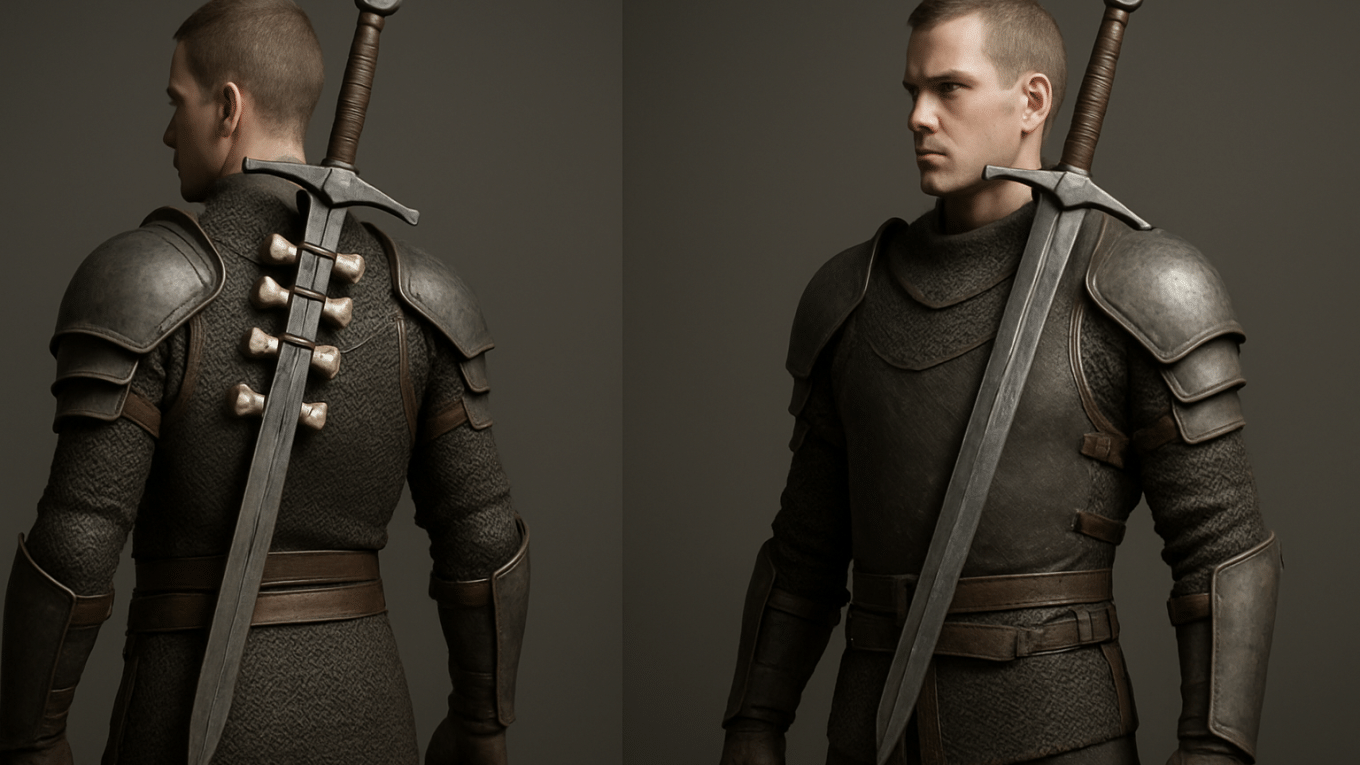
Weapon Integration in 2026: Should You Attach to a Bone or Merge into the Character Mesh?
Weapon Integration in 2026: Should You Attach to a Bone or Merge into the Character Mesh?
The question of whether to attach a weapon to a bone or merge it into the character mesh is one of the most common pipeline decisions facing game developers in 2026. The short answer is that in most professional game development scenarios, attaching the weapon to a socket on a bone is the superior method. This approach preserves modularity, allows for dynamic weapon swapping, and integrates seamlessly with modern AI-driven asset pipelines. However, merging into the character mesh still holds value for specific use cases, such as final hero assets for cinematics where no customization is required.
This guide provides a complete technical comparison to help you choose the right approach for your project. Whether you are building a AAA title with deep customization or a mobile game requiring maximum performance, we will break down the impact on animation, physics, and rendering. We will also explore how GripForge solutions streamline this workflow in 2026.
The Technical Trade-off: Modularity vs. Performance
When deciding between a bone attachment or a merged mesh, you are fundamentally deciding between flexibility and micro-optimizations. The modern 3D game asset marketplace has heavily shifted towards modularity to support the demand for player customization and live-service updates.
Attaching to a bone (Socketing) involves creating a mount point—usually a socket—on the character's hand bone or spine. The weapon is a separate static mesh or skeletal mesh that the engine snaps into place at runtime.
Merging the mesh (Skinning) involves physically welding the vertices of the weapon to the vertices of the character model. The weapon is then weighted to the hand bone within a single combined asset.
While merged meshes historically offered a slight performance advantage due to fewer draw calls, the rendering pipelines in modern engines like Unreal Engine 5 and Unity 6 have made this advantage negligible for most budgets in 2026. The memory overhead of duplicating geometry for a merged mesh often outweighs the draw call savings unless the character count on screen is extremely high.
Why Bone Attachment is the Industry Standard
In 2026, the vast majority of production pipelines favor the socketing system. This is largely driven by the need for reusable game modules and gameplay systems. If you can swap a sword for an axe without altering the character file, you save significant production time.
Key Advantages of Bone Attachment:
- Dynamic Swapping: Players can pick up new items, drop weapons, or change loadouts without the game needing to swap the entire character mesh.
- Animation Retargeting: With AI game development MCP integration becoming standard, animation rigs are expected to be generalized. A detached weapon allows the same animation to be reused across multiple character types.
- Storage Efficiency: In a 3D game asset marketplace scenario, you store one character mesh and one weapon mesh. If you merge them, you must store a unique mesh for every character-weapon combination.
- Physics and Collision: Detached weapons can have their own collision hulls. This is crucial for mechanics like throwing the weapon or having it drop on the ground.
The Case for Merging into the Character Mesh
While less common, merging the weapon into the character mesh is not obsolete. It remains a valid option for very specific constraints, particularly in mobile development or metaverse avatar systems where customization is locked.
When to choose a merged mesh:
- High Entity Counts: In RTS games or mobile crowd simulations where you render thousands of identical units, the reduction in transform calculations can help slightly with CPU performance.
- Static Avatars: If the weapon is permanently fused to the character design (like a cyborg arm or a specific boss weapon), merging prevents visual detachment bugs.
- Pre-Baked Physics: For pre-rendered cinematics or non-interactive background characters, merging simplifies the hierarchy.
However, even in these cases, the lack of flexibility often becomes a burden. If you later decide that the enemy AI should drop the weapon upon death, a merged mesh requires a complex mesh-slicing setup rather than a simple detach function.
Animation Considerations: 3D Animation Rigging and Retargeting
Your choice directly impacts your 3D animation rigging and retargeting workflow. When you attach a weapon to a socket, the animation system only needs to track the hand bone and the weapon reference. The weapon follows rigidly.
If you merge the mesh, the weapon is not rigid. It is subject to skinning deformation. If the weights are imperfect, the sword blade may bend or wobble when the character swings their arm. To prevent this, you often need to paint weights meticulously or apply a rigid skinning modifier to those vertices.
Rigging Impact:
| Feature | Bone Attachment | Merged Mesh |
|---|---|---|
| Rig Complexity | Low (Standard socket) | Medium (Requires rigid weights) |
| Retargeting Ease | High | Low (Weapon baked in) |
| Deformation Risk | None | High (Sword bending) |
| Animation Layers | Easy (Upper body overrides) | Complex |
For developers utilizing AI-driven rigging tools, maintaining a standard humanoid skeleton is vital. GripForge’s AI 3D game asset creation tools are designed to output assets that adhere to these standard hierarchies, ensuring that weapon sockets line up immediately upon import.
Performance Analysis in 2026
Let’s address the performance myth. In older engines, a merged mesh saved draw calls. In 2026, with Nanite and GPU-driven rendering, the bottleneck has shifted from draw calls to material complexity and overdraw.
Draw Calls vs. Memory:
- Attached Weapon: Adds 1-3 draw calls (depending on materials) but no additional VRAM for the character if the weapon instance is shared.
- Merged Weapon: Keeps the character at 1 draw call, but creates a unique vertex buffer for every combination. If you have 10 characters and 10 weapons, that is 100 character meshes in memory instead of 10 + 10.
For a game designed for the United States market with high-end PCs and consoles, the modular approach is unequivocally better. The ability to stream high-resolution assets individually (attached) rather than loading monolithic merged files ensures smoother open-world performance.
The AI Pipeline Advantage
The rise of AI in game development is pushing the industry further away from merged meshes. AI game development MCP integration allows designers to prompt for a new weapon and have it automatically imported, assigned to the correct socket, and equipped to the character via natural language.
If your character is a singular merged file, this automated system cannot easily update it. It would require a new export and bake every time. Modular assets are prerequisites for high-velocity iteration.
GripForge serves as a bridge in this workflow. As an AI 3D game assets marketplace, it prioritizes assets that are “epipeline-ready.” This means:
- All rigs are compatible with standard humanoid presets.
- Weapon assets are cleaned and centered at the pivot point for easy socketing.
- Mesh colliders are separated from render meshes.
Optimizing Your Game Engine Asset Pipeline
Your game engine asset pipeline hinges on this decision. If you choose bone attachment, your import process is straightforward: import character fbx, import weapon fbx, create socket in the character blueprint, attach weapon at runtime.
If you choose merging, your pipeline requires a pre-processing step. You need a tool to combine the meshes and transfer weights. This slows down iteration.
The Essential Checklist:
If you are still undecided, run through this checklist:
- Can the player change weapons? If yes, Attach to Bone.
- Can the weapon be thrown or dropped? If yes, Attach to Bone.
- Is the weapon integral to the silhouette? If yes, consider Merging.
- Are you targeting low-end mobile devices with a single character variant? If yes, Merging might save a fraction of a millisecond.
- Do you plan to sell or reuse the character? If yes, Attach to Bone.
Conclusion: Optimize for Flexibility
In 2026, the answer to “Should I attach a weapon to a bone or merge it into the character mesh?” is almost always to attach it to a bone. The technical overhead is negligible, while the benefits in workflow, modularity, and future-proofing are immense.
By keeping your assets modular, you unlock the full potential of the current AI-driven game development landscape. You can populate your world with variety without redundant memory bloat.
Explore how GripForge can elevate your production pipeline. Our platform curates high-quality, animation-ready characters designed for seamless socket attachment. Whether you need unique heroes or standard enemies, we help you avoid the pitfalls of mesh merging and keep your project running smoothly.